Thursday, January 1, 2015

The 7 Pillars of Catholic Spirituality by Matthew Kelley: The Rosary

I've been hoping to get back to writing lately - perhaps more will come soon.

Studious H.E. readers have will have noted that I never completed the Matthew Kelley series.  Actually, I skipped No. 6 - Good Spiritual Reading somewhat intentionally (see side-bar for my list) and completed, but forgot about No. 7, so here you go:
. . .

No. 7: The Rosary

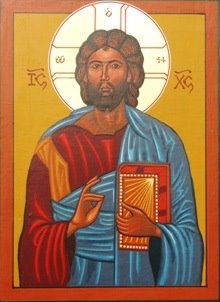
This post could also be called, “Mother Knows Best.”  If your mother generally knew what was good for you, how about Jesus’ mother?  Mary is the mother of the Savior.  She is the perfect Christian.  She is the model of the Church.  She is the New Eve.  She is the Queen-mother.  She is the Daughter, Mother, & Spouse of the Trinity.  She was present to Jesus’ whole life even unto his death & resurrection, & the birth of the Church at Pentecost.  It is thus that we can ask her to pray for us sinners at the hour of death, because she shared the sufferings of her Son in his hour.  She is the exemplar of God’s plan for mankind, & so is inextricably bound to the ministry of her Son.  Moreover, Jesus gave us to her as her children.  He wants us to know & love his mother as much as he does.  

The objection is that honor given to Mary competes with or diminishes the glory due God.  Mary does nothing other than bring us to her Son, & that’s what the Rosary is about: bringing us into the presence of her Son through the pondering of the saving events of his life.  Further, as Mr. West said in his bit on contemplation, the saints all made Jesus visible to the people & circumstances of their time.  In honoring the saints & asking for their intercession, we really honor Christ Jesus & ask for his intercession before the Father.  They do not compete with Christ or somehow diminish God’s glory; through these who have achieved faith’s goal, his glory blazes more brightly.  Our Faith is severely diminished if we cannot recognize the communion of saints as the living, body of Christ.  The notion that those who have passed on have no knowledge or connection to those of us still making our earthly journey is, frankly, a fractured, distorted, & diminished view of Christianity.  


We are not the first believers in Christ Jesus, nor did we come to the Faith on our own.  Rather, our faith is drawn from & sustained by the well of faith formed by uncountable multitudes who confessed their love of Jesus Christ for two thousand years.  At the head of that heavenly array stands Mary of Nazareth, the one individual from whom the entire Christian Faith sprang, beginning with her Fiat: "Behold, I am the handmaid of the Lord; let it be done to me according to your will."

Therefore, what could be better than to contemplate the life of Jesus with the company of Mary, his mother?  Who could possibly be a better guide to Jesus than the one who says, "Do whatever he tells you."

Pray the Rosary.  Mother knows best.

P.S.: Photo of mosaic image taken in the chapel of Our Lady of Pompeii located in the Basilica of the National Shrine of the Immaculate Conception in Washington D.C.
...

Saturday, March 16, 2013

New Beginnings (again)

As my last post title explains, I have been utterly overwhelmed for the past several months.

I began a new job at the beginning of the year, but was still able to take a load of the parish Youth to Washington, D.C. for the National March for Life.

We arrived early Friday morning & attended Youth Rally & Mass at the Comcast center (U. of Maryland), which is really an overflow of the Verizon Center Mass closer to D.C.  Just 20-thousand or so...


There was also an opportunity to go to Confession; an operation run by squadrons of fantastic religious sisters (Sisters of Life, Domincans, etc.), shepherding untold thousands of folks through the Confession lines.


Then we rode the Metro down to the Mall.  There were so many people & groups on the streets leading up to the March that I felt we had already participated in it by the time we actually got to the Mall!  There were so many Catholic parishes, schools, & other groups there - no question that this is a Catholic movement above all.  Yes, plenty of other folks from various religions participate.  But why is it so Catholic?  I think it is because of Mary.  The Church sees herself as not only the Bride of Christ & her members not only as brothers & sisters of the Lord, but as sons & daughters of Mary, who bore, loved, protected, nurtured, taught, & guided our Lord Jesus & continues to do it for us today, but also wants us to do it for her other children - those yet to be born.  


If one sees life itself as a gift from a loving God, then he must fight for life at all costs.  


I ran into so many great people during the March itself - a lady from Lansing passing out Rosaries (see above), my catechist Sr. Mary Michael of the Nashville Dominicans, a few wonderful older sisters originally from Tennessee, but long-time members of the Dominican Sisters of Mary, Mother of the Eucharist in Ann Arbor, MI.  There were all kinds of speakers & preachers.  It was almost like a giant Catholic rally - if this had been a hostile crowd, we could have taken the place.  But everyone was so joyful!  


Then it started to snow heavily with a stiff wind.  I know that will stick in the minds of our Youth:


We - all 14 of us - stayed the night at the house of the brother & family of one of our parishioners.  Their Christian hospitality was extraordinary.  I felt like we were on retreat!

The next day, we toured the Smithsonian, they attended Mass at the Basilica of the National Shrine of the Immaculate Conception, a house devoted to Mary as the Radix et Porta of Christ.  


It was packed with thousands - standing room only.  Our kids took refuge under a side altar, like the martyrs in the Book of Revelation (This is well before Mass started - by the end, they were literally under the altar!)


The National Shrine has, perhaps, the finest sacred music program in the country.  This is just a taste - the Gloria:


 The celebrant was Abp. Di Nardo (I think) & his homily was straightforward & spot-on - How do we discern the will of God?

He noted that most people who ask, "What would Jesus do?" are really asking, "What would I do if I were Jesus?"  Then he suggested the following points for understanding God's call for young people (& old) in today's ever-shifting religious, philosophic, & moral landscape:
  • Study the Scriptures
  • Stay true to the sure & certain teachings of the Church as found in the Catechism
  • Participate fully & rightly in the Sacramental life of the Church, esp. Holy Mass
  • Cultivate a life of prayer

In this way, one will always know what is truly from God & have the strength to choose it, what is not of God & reject it.  Sounds like a plan.  I know this was a powerful, even life-changing experience for our Youth - & our adults.


Since then, I've had to cram for several exams & write several papers for my Franciscan U. coursework - the big I am still working on, overdue as it is.

We've also seen the surprising abdication of Pope Benedict - who truly has been a blessing to me & other millions, I'm sure - & the election of Pope Francis, whom I am sure will likewise be a blessing.  I am eager to see how his pontificate plays out.  

It is has been sad to see the media malign Francis for not buying into their agenda of the re-creation of man in his own fallen image (read: total sexual license), even as they pat him on the head for being a champion of the poor. "Oh, look honey, he rides the bus with all those dirty, poor people."  Like any CNN anchor person or Hollywood celebrity has ever taken the bus to work.


New beginnings all around, because our God is a God of new beginnings.
.

Monday, January 21, 2013

Overwhelmed!

.
.
Truly so!  Overwhelmed by the cares of the world, but much more so by the goodness of God!

But I just heard a striking comment on the EWTN program The Journey Home by a priestly convert about his very first experience of wandering into a Catholic church - Westminster Cathedral - for the first time.  He says he wandered in just after Mass or Vespers - the incense lingered in the air & the choir was practicing their chants, and -

"I was overwhelmed by the sense of holiness..."

I felt the same way with my first experiences with the Catholic church - first as a small child at the Shrine of the Immaculate Conception in Atlanta & decades later walking into Westminster Cathedral myself.  I, too, was overwhelmed.


If a total stranger with no knowledge of the Catholic Faith wandered into your parish church, would they feel overwhelmed?  By what?  Holiness?
.

Monday, December 31, 2012

Impossible!

.

I'm watching papal Vespers (Evening Prayer I) for the Solemnity of Mary, Mother of God on EWTN, & I just saw something that I have been told over & over again was impossible:

YOUNG, LAY PEOPLE IN THE CONGREGATION WERE SINGING THE GREGORIAN CHANT ANTIPHONS ALONG WITH THE SCHOLA.

But, but, but... That's impossible!!!  No one knows Latin anymore.  Gregorian chant will never reach the young people.  Vatican II got rid of all that.  Everything is supposed to be in English now, even in Rome, I'm pretty sure.

Sorry my guitar-strummin', tambourine-shakin' brothas & sistas: everything old may be new again, but somethings are timeless.  Such is the beauty of Gregorian chant, which belongs to no time, but is perfect for every time.

Aside form a few modern touches (including my ability to watch it live form a quarter-world away), this celebration of Vespers could have been from a hundred years ago or a thousand years ago.  It might have even resembled worship in the great Hagia Sophia in the heyday of the Byzantine Roman Empire.

Thanks be to God, indeed.
.

Wednesday, December 26, 2012

Merry Christmastide!

Some sights & sounds from yesterday's Traditional Christmas Day Mass at Holy Ghost Catholic Church in Knoxville, Tennessee.

The Faithful gathered for a program of carols & hymns before Mass began:

Good Christian Men Rejoice!

Angels We Have Heard On High

Silent Night & Away In A Manger

Then came the entrance procession, to Adeste Fideles:

Then the Introit to begin Mass:

 After the Kyrie, then the Gloria, from William Byrd's Mass for Three Voices (our voices started out a little rougher than we might have liked, but it came together well enough):

The sacred ministers take a rest while the Gloria is sung.

The Alleluia before the proclamation of the Gospel:

Father David Carter exhorts the Faithful to ponder the Mystery of the Incarnation in an unbelieving world & to make Christmas more than just a single day:

The Communion verse:

After the Benediction, the schola sang Patestrina's Alma Redemptoris Mater, then followed with Joy To The World.  However, I didn't record those, so I thought Hark! The Herald Angels Sing make a better "closer."


Hope you had a lovely Christmas Day, & will continue to have a Merry Christmastide!
.

Sunday, December 16, 2012

Why?

This question must play over & over again in the minds of those in Connecticut who lost children or family in the shooting tragedy & all in the community who were affected.  Why now?  Why here?  Why these children & teachers?  Why would God allow this?  I only want to say three brief things about this situation.

Everything that happens happens according to God's will - he either permits some things or he directly wills things.  Evil is not the equal & opposite of God & his love.  Evil did not somehow "beat" God.  He permitted it.  We cannot know why, other than to know that God always brings the greatest good from the most terrible evil.  Even believing this to core of our being will not take away the grief & sense of loss, and we may not like it or understand it, but we must trust this is so.  This is the supernatural virtue of hope - that God will do what he has said.

As Fr. Christian said in a couple of lovely posts [HERE & HERE], the response to evil is to keep doing good.  Keep going with acts of charity, which Catholics call the corporal & spiritual works of mercy.  But perhaps the greatest thing we can do is become a people of prayer, by which we cull the evil from our own hearts & intercede for others.  Pray the Rosary.  Read the Gospels.  Pray at Holy Mass.  Pray the Liturgy of the Hours.  Fast in some way, especially from the things that draw us more toward the world than toward God.  Rejoice in the Lord always & give thanks to God in all things.  Make prayer & immersion in the Scriptures the foundation of all you do.  Here we encounter the saving power of the God of Jesus Christ who said, "without me you can do nothing."

Many people have called this a senseless act of put evil by a deranged person.  It is possible that people have mental disorders that make them incapable of discerning fantasy from reality or right from wrong.  However, the young person that did this did something deliberate that required planning & forethought.  He knew exactly what he was doing.  And he's not the first one.  This sort of thing was utterly unknown when I was young.  This person & his actions are the product of our society & its values.  We glorify in the media every perversion & impiety that man can dream up, & even enshrine these very things in our laws.  Violence, gossip, consumerism, gluttony, vulgarity & profanity, homosexuality & mockeries of marriage, lust & pornography, abortion & contraception, witchcraft & the occult, pride & vanity, death.  In our self-satisfaction, we have drifted so far from God & left a tremendous black & poisonous void in our society, our hearts, & in the lives of our young people.  If we insist upon a society totally devoid of God, or morality, or truth, or love, we will never see the end of this sort of thing & it will grow ever worse.  We must as a society & as individuals return to God with our whole hearts, & teach God's law to our children.  "Repent, & believe in the Gospel."

Sunday, December 9, 2012

Advent: Get Ready! He's Coming!


Sale! 50% Off! Clearly the world and the Church have different ideas about what the season of Advent is about.  Both proclaim: Get Ready!  So a good question would be, “Get ready for what?”  The world’s preparation for Christmas is, of course, the buying frenzy that precedes it.  Its savior is “the perfect gift” and its sacrament is the swiping of plastic at the checkout register.  The pull of the secular holiday even draws the faithful into its vortex.  So, again, for what are we preparing and how should we do it?

As Catholics, we know for what and for whom we prepare: the arrival of Jesus - God himself who enters silently and secretly into human history to redeem both humanity and history, giving them their fullest meaning.  The secular deity offers an immediate but superficial salvation in the form of the latest fashion, entertainment, or technology; this god would define us according to our desires and possessions.  The true God invites us to become most fully who we were created to be through union with him.  This gift is never on sale; it is totally free, but demands our entire being.

God teaches us how to prepare through the Advent liturgies.  The loss of the Gloria and liturgical violet remind us of the darkness under which humanity labors.  We have been part of that darkness, so we do penance.  We participate in the secular insanity, so we must reorient ourselves to God through quiet, reflective prayer and listening to his prophetic words.  Jeremiah declares God “will fulfill the promise I made to the house of Israel… I will raise up for David a just shoot.”  God has not forgotten his people lost in darkness.  Baruch encourages, “Up, Jerusalem!... look to the east…God is leading Israel in joy… with his mercy and justice.”  Dawn begins to break along with hope of restoration.  In the third week, the color rose anticipates the sweetness of the coming of our deliverer, as Zephaniah says, “Sing joyfully, O Israel... The Lord, your God, is in your midst, a mighty savior.”  Finally, Micah announces the coming ruler of Israel whose “greatness shall reach to the ends of the earth; he shall be peace.” Here we find more than we could ever hope for: the God of Israel offers his salvation to the whole world - in him all humanity can find brotherhood and peace.  Spend time with these prophets whose words teach us Advent’s true meaning.

This arrival has already happened in history, but it is not yet complete: Jesus comes to his people over and over again, and he continues to bring us his peace: in prayer, in the Scriptures, in those in need, in the sacrament of Reconciliation and in the Blessed Sacrament of the altar. Every year he calls us to ponder and enter evermore deeply into this mystery.  He will come again at the end of history to judge all men and to present all things as an offering to the Father.  Now, that’s an arrival for which we should get ready!

Ed: This article was originally written for our diocesan RCIA newsletter.

Thursday, December 6, 2012

Laudate Dominum - On Liturgical Music

Since I was up really early with a cold, I switched on EWTN & found an interesting program on sacred music hosted by Fr. George W. Rutler.  His specific topic was on origins & uses of the ancient hymn we know as Let All Mortal Flesh Keep Silence, but perhaps his larger point was to make us consider what qualities a piece of music must have for inclusion into the liturgy.


He rightly denigrates pop-based music, noting that Arius spread his heresy that Jesus was not of the same substance as the Father, but a lesser, created substance by way of hymns set to the pop tunes of the day - catchy & easy to remember.  Spread as it was throughout the world via the trade routes, it took centuries for the Arian controversy to resolve itself.  As to pop music, it is always dangerous to import the world into the sacred liturgy on theological grounds, but frequently the music just stinks.  I fully agree with him when he says there hasn't been a hymn worthy of singing at Mass in recent memory, & I'm sure he's holding back a little.

"I am prejudiced.  I am prejudiced toward the true, the good, & the beautiful." - Fr. Rutler

Consider the context: pop music comes from the world of entertainment.  Does anyone really listen ever so carefully to pop music so as to glean the deepest truths of the human soul?  Do we not rather just enjoy a passing feel-good moment?  So, to hear worldly music in the liturgy is to set the expectation that if we are not swelled up into a superficial, emotional high by the end of Mass, the liturgy isn't very good.  Mass is boring.  I don't get anything out of it.  Etc.  So frequently more & more experimentation & banality are applied to elicit the desired response.

"The less we understand what worship is, the more we will turn it into entertainment." - Fr. Rutler

He also points out that a choir should be in the loft behind the faithful, to push them forward in a musical swell toward God.  I always knew this, but could never quite express it.  It would help if the priest was also there to pull them ad orientem.  The term "Mass celebrated versus populum" makes me crack a smile.  Against the people?  Sure feels that way some times.  Fr. McJokey, you're not that funny; in fact, it really annoys & saddens me how lightly you take these sacred things.  Do you have no fear of what God will say to you in the end about having made Mass all about you instead of Christ Jesus?  Why don't you just stick to the printed text, say Mass well, & try not draw attention to yourself?  Same for you Mr. Plucky Strumalong songleader - you're not Eric Clapton & this isn't Madison Square Garden.  There really is no reason I should ever have to hear or see you, yet you pop up to the microphone every other minute with some unneeded direction or clever comment.  Let the choir sing the chants & we'll listen when we're supposed to & sing when we're supposed to as best we can.  And can you just save your personal musical interpretative project for MSG - I'm sure your invitation is in the mail.

"Music is the very atmosphere of worship." - Me

Naturally, this is a question answered long ago by the Church, but an answer to which no one seems to want to listen - bishop, priest, conductor, & people alike.  Gregorian chant is to be given primary place in the Roman liturgy.  Can anyone please let me know the last time they heard the honest-to-goodness Gregorian chant propers sung straight out of the Graduale Romanum instead of folksy hymns out of a hymnal at an Ordinary Form Mass?  Seriously, I'd like to know if the Church's directive (option #1 in the GIRM) is being obeyed anywhere.  These chants grew up with & within the Roman liturgy; they are inherently part of it.  Not singing them - or at least the propers in some form or another - is simply leaving part of the Mass out in favor of something that is not part of the Mass, but simply brought in from the outside: hymns.  Chant fosters an atmosphere of prayer & contemplation of the divine like no other music, though the best of polyphonic music comes close.

In a strange hiccup in the history of liturgical musical, the music from the period of the operatic aria now sounds quite formal & high-church, but was called out especially by St. Pope Pius X for being the bombastic & attention-seeking pop music of his times.  We have to give Mozart's music some leeway, though.  I once heard a priest say about sacred music that Bach was the greatest church musician, but only because Mozart's music was not of men but of the angels.  Is Mozart for every musical movement of every Mass?  Absolutely not.  But for a special occasion, such as the wedding video above, I can not think of anything more appropriate.  I hope you enjoy Ericka's first public offering of Mozart's Laudate Dominum.
.

Monday, December 3, 2012

Jospeh Cardinal Ratzinger - In the Beginning

A big question for me as a young person was how to understand & reconcile the Bible's account of the creation of man with the scientific account.  Over the years, I have come to peace with this issue & now cherish the profound truths found in the words of Scripture & the teaching of the Church on this matter.  But clear, concise, & orthodox writing on this subject can be scarce.  It was a great joy, then, to discover a small book by then-Joseph Cardinal Ratzinger called In The Beginning, a collection of homilies he gave in Munich some years ago, in addition to a forward & an epilogue.

I posted a series of summaries of this important work & have collected them together in this post, but you really should just read the book.

Homily 1 - Part 1Part 2

Homily 2 - Part 1 & Part 2

Homily 3 - Part 1 & Part 2

Homily 4 - Part 1 & Part 2

Epilogue - Part 1 & Part 2

On this question of origins, one should note the different starting points of the Church & the modern scientific culture.  The latter starts from a presupposition of skepticism, that God does not exist & that man is nothing more than a particularly bright animal with no particular meaning to his existence.  Here man demands that God be proven, that he be picked apart like a frog on a high school biology lab table.  For the Church, however, God is already known, because he has revealed to himself to man & has shown man the tremendous dignity of his being & the glory for which he is destined.  It is a presupposition of faith based on a knowledge much deeper than facts.

While the skeptical methods of science have great merit when studying the natural world, they have little application in the supernatural realm (Obviously Sts. Thomas, Bonaventure, Duns Scotus, etc. applied profound principles of reasoning to theological matters; so here I mean specifically the presupposition of skepticism, not scientific reasoning in general).  To do so is to apply the wrong tool the problem - a bad, even dangerous, result is virtually guaranteed.

So if two men approach you and one says, "Your existence is meaningless; freedom is an illusion, as everything you are or do is predetermined by molecular interaction; there is no such thing as love; there is nothing beyond this life; your destiny is darkness & silence," and the other says, "you are a beloved child of the most high Father; you are made for an eternity of unimaginable glory, if only you would choose it," to whom are you going to lend your ear?

Wednesday, November 28, 2012

Catholic Youth & Vocations, Part 1

.
.
Yay!  I found a work-around that seems to get troublesome videos uploaded.

So, here is Part 1 of my discussion with Diocese of Knoxville seminarian & all-around good guy, Joseph Chait.  Here he tells us about how he discerned his vocation & what life is like at seminary.

The recording volume is a little low - sorry 'bout that.
.


Saturday, November 24, 2012

Catholic Youth & Vocations, Parts 2 & 3

During Thanksgiving break, I had an opportunity to talk with Joseph Chait, seminarian for the Diocese of Knoxville, about young Catholics and discerning one's vocation.  So far, Blogger refuses to upload Part 1 of the talk - will keep working on it.
.
.
.
Joseph gives some important advice: we all have a vocation to holiness, regardless of our particular calling.  Holiness is not just a special gift given to people like Mother Teresa or Pope John Paul II; it is something that every baptized & confirmed Catholic should long for, fight for, & manifest in word & deed through their love for Jesus, his Church, & therefore for all mankind.  Perhaps this focus is what we've been missing over the past several decades.

Seriously, "become a saint!"
.

Monday, November 19, 2012

Sunday Vespers

,

Here's a bit of fun!  After E.F. Mass yesterday, I asked some of the schola members to stay & sing Sunday Vespers with me.  We just sort of threw it together on the spot, but it's not too bad, hopefully, even prayerful!

Please have a listen to the other evening prayer recordings at rcvespers.blogspot.com.
.

Thursday, November 15, 2012

New Vespers Project


Alright, I did something I may regret - I started a new blog site to post my evening prayer recordings:

Roman Catholic Vespers found at http://rcvespers.blogspot.com/

My intention is to post the complete 4-week Psalter as we move through it, then adapt as the liturgical seasons change.  Please go have a listen & let me know what you think & if it will be of any use.

"Become a saint!"
.


Wednesday, November 14, 2012

Vespers - Tuesday, Week IV


One of the reoccurring reasons I hear from people of why they don't pray/participate in the Liturgy of the Hours is that it is confusing.  Maybe, but it is a liturgy, you know.  You wouldn't expect someone who's never been to Mass before to just walk right in & know exactly what's going on & what to do.  One has to become familiar with it slowly, learning its different parts & their meanings gradually.

So, I propose an experiment: in hopes that folks will become more familiar with the Liturgy of the Hours, I will attempt to record & post a full, 4-week cycle of Evening Prayer, or Vespers.  I hope more people will  come to love this ancient form of Christian prayer as much as I do.  Even the bishops are also interested in breathing some new life into the Hours [click here].

I will try to post them on the sidebar as I get them recorded.  This is quite complicated, however, because of the various saints' days & other feasts.  Plus we're heading into the season of Advent soon, so there will be far more variations upcoming.  Ideally, I would have each day's recording posted that evening, but this will be extremely difficult, especially to add the subtexts.  Please keep in mind that there is a lot of improvisation required to sing the Hours, so my apologies for the miscues.

Let me know - either in the combox or via email - if this is useful to you or if you would like to see something different, say, just an audio recording.  Thanks & God bless.

"Become a saint!"

Saturday, November 10, 2012

Penance

.

[UPDATE] Here is the finished version of the video for our present Whole Community Catechesis program on the sacrament of Reconciliation.  Last names were abbreviated to protect the guilty, or at least highly suspect.  Looks like the text got cropped off a bit on this format; but should be fine on the "big screen."  Enjoy.

"Become a saint!"
.

Thursday, November 8, 2012

Silent Expectation


Following up on my last post about the problem with folks at Mass feeling the need to say/sing everything instead of actively & receptively listening, I wanted to mention a related approach people sometimes bring to the liturgy: the need to hear everything.

That probably seems like a pretty weird gripe to write a post about.  I will give an example: a friend with the typical depth of understanding of the Roman liturgy said that they wished the priest would say those little prayers after the offertory out loud so everyone could hear them.  Below is a transcription of what the people are to hear as the priest, bowing, prays in a quiet voice...

"mmmnnmmm... mmnnmmmnnn... mmnmnmnm... nnmmnmmnnn... mnm."

It is, in fact, a very profound prayer.

At this point in the Mass, the priest is entering the Holy of Holies, the very heart of the liturgical celebration.  The profound bow and quiet voice tell us that he is not talking to us & not just communicating information.  He is speaking directly to God on our behalf, asking that He accept our sacrifice.  That is his job; to offer prayers to God on behalf of the assembly. By virtue of his sacramental configuration to Christ Jesus through Holy Orders, he can do this in a way that no other lay person can.  Some people do not believe that priests have any special character above or beyond any other member of the Body of Christ.  These people, if they claim to be Christian, are called Protestants.

My point is that you don't need to know what the priest is saying.  Maybe you could learn what he is saying, and that may be spiritually enriching for you; but the fact is, you just don't need to know.  If you did, he would be addressing you.  If you must know, here is what the Roman Missal says...

"With humble spirit and contrite heart
may we be accepted by you, O Lord,
and may our sacrifice in your sight this day
be pleasing to you, Lord God."

Then the Priest, standing at the side of the altar, washes his hands, saying quietly:

"Wash me, O Lord, from my iniquity
and cleanse me from my sin."

OK, there it is.  Happy now?

I propose as one possible explanation that people simply do not trust that this arrangement of God, priest, and people works.  They do not really believe in the power of the priest's prayer on their behalf.  If they cannot hear the prayer, & so have "full, conscience, & active participation" in the prayer, then they have no ownership of it, no control of it.  It is a lack of trust in the sacramental economy & a tacit denial of the operation of the Holy Spirit within the Church.  It has an echo of Pelagianism: "No thanks, God; I've got this one myself."  If this attitude does indeed exist, I would say it is a terrible cancerous one within the household of God.  

I want to contrast the typically very busy & noisy new Mass with the utter serenity that pervades the old Mass (though my intention here is not to bash the Ordinary Form, because the new Mass can be celebrated very beautifully & reverently [it just isn't very often] & the old Mass can be celebrated poorly, too [it just isn't very often]).  

One commonly-used cudgel for criticizing the old Mass is that the priest stands at the altar - let's all say it together - with his back to the people & just mumbles his prayers in a language no one understands anyway, while the people just sit there praying the Rosary, looking around at the stained glass windows, or just dozing off, occasionally being jolted to consciousness by the priest's "Dominus vobiscum."  While there may have been some truth to these exaggerations, my purpose here is to evidence the utter trust that Catholics once had in the power of the priest to intercede for them in the sanctuary.  There was no need for them to hear and understand everything - just knowing that the priest as Christ was at work on behalf of his people was enough.  One old custom that reflected this was that people would bow - some even genuflect - as the priest processed into the congregation.  From the choir loft, this looks like the people are doing a very slow, back-to-front holy wave.  Even in the new Mass, I always give at least a solemn nod to the priest.

So, any new thoughts here?  Are you thinking about your own ability to let the priest be your intercessor at the Mass?  Your own level of trust that God will hear the priest's prayers & answer them?  How an attitude of quiet expectation may be the most active one?  If so, my work here is done.  

Friday, October 26, 2012

So I've Got That Goin' For Me...


... which is nice.
.

Tuesday, October 23, 2012

Listen... Do You Want To Know A Secret?


I've had several conversations with folks lately about music in the liturgy.  It is amazing how this topic see can rouse the passions of normally intelligent & level-headed people like no other.  I want to make a few observations about my gleanings.

First, I have to make clear that almost everyone I've ever talked to about this was utterly sincere in their conviction.  They really believe that their vision was the one that would bring people to a deeper relation with God.  Just as universal, however, was their ignorance about the Roman Church's practice going back to time immemorial, how that tradition developed & why, & what the Magisterium currently teaches about music in the liturgy.  To bring any of that up, however, immediately makes one a meanie-pants & the conversation quickly shuts down.

Most people begin with the reference point that a) what their current parish practice is is correct & normative, & b) that there really are no norms anyway; you can do whatever you want.  You can hardly blame them - it's been an utter free-for-all for 3 generations now.  So, within this background are a couple of thought streams that frequently cross; but remember, you're not supposed to cross streams!  That's bad.

There is a group whose viewpoints on liturgical music combine preference ("I love electric rodeo techno-funk!") & emotion ("That song makes me feel all gwishy inside!").  Both of these are largely superficial & inadequate to the worship of God & unconnected in any meaningful way to the liturgy itself.  They are imports from pop culture, & largely seek the manipulation of emotional states & rarely dive deeper than the surface.  The "quality" of a person's subjective emotional response is not any sort of measure of what is appropriate or required. Many think we will bring the people in, especially the youth, if we just make the music at Mass, indeed the Church itself, more like the world.  The Church, however, exists to convert the world to Jesus Christ.  She needs to speak to the world in ways it can grasp to preach the Gospel, but her worship can never be of the world, because she is inherently other-worldly.

Music appropriate for worship should not at all have its origins in "what's hot now," or "what people like" or "it has a great beat & it's easy to dance to," but rather who is it we worship, who are we, & what demand does this relationship make on us.  It should raise our whole being up to prayerful contemplation of the divine Mystery unfolding before us.  It must prepare us for a direct encounter with God.  Confusing this issue is that some of the new music is just fine outside of Mass, say at a parish dinner or at a youth concert.  It should be not only obvious that secular music styles should not be admitted to the liturgy, but quite offensive to our religious sensibilities. However, you can't really have a meaningful discussion with people who want to argue at the level of preferences or subjective emotional response.  As for the Church, she has stated her part as to what music is appropriate to the Holy Sacrifice (Sancrosanctum Concilium 116).

Another group are the "Do-ers," who present the real reason for this post.  The maxim for these people is, "Everybody must sing everything all the time."  If you're not doing something or singing something, you must not be worshiping   I've talked about this before, but the short of it is, our actions at Mass are only a feeble echo of the one who truly acts in the liturgy: Jesus Christ.  He is the one who is both priest & victim.  He is the one who offers us union with himself & presents us to the Father.  You got anything to top that?  Didn't think so.  Our main job is to focus on this incredible mystery long enough to receive the gift God has for us.  Silence & contemplation is required.  A mere multiplication of words, words, words, words, words are not helpful here.  The Word is enough; what is required is music that proclaims, upholds, & sustains that Word in solemnity, beauty, & prayerful contemplation.

Our culture abhors silence.  People today seem uneasy to be with their own thoughts in solitude.  Perhaps that's because a quiet soul is fertile ground for God to work.  Something might be asked of us in the silence of contemplation, and change is so very hard.   What this means for liturgical music is that people feel hurt or cheated if the choir or cantor sings something & they are obliged to merely listen.  This is often the argument against some forms of sacred music like polyphony or the more melismatic chants: that regular folks in the pews can't "participate."  And since external participation has been thrust forward as the standard of liturgy, this just won't do.

However, genuine liturgical music is not just any song expressing religious sentiments that anyone can sing.  It is most properly the actual texts of the liturgy that the Church gives us proclaimed in a way that ennobles it.  The people's job is to be attentive to this word proclaimed, because, in reality, it is Christ himself proclaiming his Word to his people.  You can say that about Incline Domine.  Lord of the Dance, not so much.  This goes for the readings at the Mass, too.  Do people feel cheated because the don't get to recite the readings together with the reader?  Our job is prayerful, expectant attentiveness.  That goes for the prayers that the priest prays, and even the periods of silence in the liturgy.  These are not mere pauses in the action - they are moments of contact with the divine. If we're not listening, we're not worshiping.

So the "Do-ers" have it backwards.  It is the interior attunement to the divine that is true "actuosa participatio." It is receptive listening that is the most fruitful action of the faithful at Mass.  Of course there is a place for singing (notably, the Ordinary of Mass, as well as appropriate hymns & chants at their respective times), but if one isn't listening - both in the the word proclaimed & in the silence, then one can't hear Christ.  We wonder why we go to Mass week after week & nothing ever seems to change. 

How to break through?  Uh, not sure.  I've had precious little success in my own efforts.  It seems that much of the resistance comes from fear of the unknown, fear of rejecting the status quo, as if doing something wrong for 40 years makes it right.  So, perhaps the genuine beauty of the Church's liturgical song simply has to be heard more.  Maybe before Mass.  Maybe at extra-Mass liturgical events.  Maybe at weddings.  Maybe at funerals.  I do know that prayerful chant & beautiful polyphony are their own evangelists.  No one has to sell you on transcendental beauty; it sells itself.  But if it's never heard, then no one will know and the status quo will never change.  Once known & loved, it will be ready to serve.  And, I suspect, all the arguments about musical preferences, emotional highs, "what about the youth!?!," and always being busy at Mass will just melt away.  The people will be busy praying & worshiping.

Tuesday, August 28, 2012

Trolling the Worldwide Internet

The other day, I was watching (& lamenting, but joyfully) the last video from SheIsCatholic (YouTube channel HERE), who has now run away & joined a nunnery.  In this case, the Dominican Sisters of Mary, Mother of the Eucharist.  We at H.E. prays that she fulfills her vocation & grows in holiness & joy.  Her witness online will be missed.

But not forgotten - she seems to have started a movement of young, enthusiastic, Catholic Vloggers.  I came across one of those - SheSpeaksWithWisdom - who posed a question about someone who during Communion time at Mass took it upon themselves to dip their Sacred Host into the Chalice she was offering as an EMHC, a forbidden action we can call self-intinction.  The priest can do this, then offer the Host to a communicant, but the communicant absolutely cannot do it on their own.  You can find the Youtube page HERE.

I made a comment encouraging digilence in these matters, but shortly afterward, someone popped up with snide remarks about religion in general - a troll.  The general rule is, "Please don't feed the trolls," but I sensed from the screen name, thought chain, & language used that this was a young person who had drunk the secular, materialistic, relativistic, if-it-feels-good-do-it Kool Aid of the world, so I thought I might try to engage.  One never knows what could result from a positive exchange.  Plus, I thought others listening in might learn something useful.

I've listed the full exchange below, at least as it stands for now.  Things have been quiet for a few days.  Maybe their mommy made them go clean up their room or something : )  The "wurlwidinnernet" is an amazing thing (thanks, Al Gore!), but it can often be a cruel beast that allows us to treat each other impersonally & with disdain.  Let's pray that all people, but Catholics especially, use the web for good & as a tool of spreading Christ's peace.
. . .

Mark G> Self intinction? Verbotten!

I know it's hard to know what to do on the spot, but as an EMHC, be prepared. People must consume the Host immediately when given. If someone walks up to you with Jesus in their hand, cover the chalice with your hand & politely ask them to consume the Host first.

If you ever see someone walking away with a Host, they need to be intercepted, charitably, of course. This is not something to treat blithely.

Why can't people just do what the Church says? Sigh...
. . .
.
FatalFistFury> But doesn't religion tell you not to think because its too hard?
. . .
.
MG> Sorry, Fury - the intellectual, philosophic, scientific, & theological traditions of the Catholic Church is unsurpassed. At least that's what my communique from Rome this morning said.

The liturgical rules exist to ensure we can worship together in harmony. They provide a way for us to enter the mystery we celebrate & protect against abuses. If everyone is doing their own thing, that's not really worshiping as the Body of Christ, is it?

P.S. Save the snark. Charity & good will wins every time.
. . .
.
FFF> I agree, but can't we have charity and good will without religion? Am I still considered as cretin l if I help people out just because I want to and not because someone I go to church/mosque/temple? I'm not trying to flame anybody and I respect your choices albeit, my previous comment did come out of cynicism(which would also prove my lack of repect thereof) and I'm glad you caught that.
. . .
.
MG> Of course people of various beliefs of no beliefs can love & act charitably towards others. Catholics hold that the Creator has inscribed the Natural Law in the soul of every person: Do good; Avoid evil. If they cooperate, God may look kindly on them in the end.

It is much harder for an atheist or even a non-Christian to give a reason for their charity or the existence of any moral absolute, esp. the reality of love. If you are genuinely open to seeking the truth, I am sure you will find it.
. . .
.
FFF> So you're saying that only as a Catholic will I understand what love actually means? And I'm pretty sure that it is not man's instinct to impulsively kill their fellow kind, just as it is man's instinct to procreate. If that were the case then we would not have survived, but since you shun evolution thats another discussion.

Do you really need a reason for good will? Are you only doing it because the Bible told you to? Doesn't that contradict what good will is then?
. . .
.
MG> I'm honored to have all these words put in my mouth! God has given man both natural law & divine revelation of himself. Many reject divine revelation, but do understand man's natural desire to love & do good. However, man's intellect & inclinations are darkened by his rebellion against God, the source of love & goodness itself.

In a world without God - a pure Darwinian world - the only laws are survival of the fittest & might makes right. The history of the 20th century is instructive.
. . .

FFF> Furthermore, it is impossible for me and most reasonable people to have the Bible considered as intellectual when no one can question it nor scientific when you can't prove anything said in the Bible.
. . .
.
MG> You falsely assume Catholics are biblical fundamentalists w/o bothering to find out if it's true - very sloppy reasoning. Catholics do question the Bible & seek to understand its message better. The Church knows that all truth is from God, so we can embrace a nuanced version of evolution. Did you know that it was a Catholic priest & scientist Georges LemaƮtre who 1st proposed the Big Bang theory? Or that the Vatican operates astronomical observatories both in Rome & w/ the Univ. of Arizona?
. . .
.
MG> The historical claims of the Bible have been proven themselves over & over; new evidence is continuously being discovered. But God can also be known apart from the Bible: thru the order, beauty, & goodness of the cosmos, & thru the immensity & glory of man's own soul. Look inward & find God's handiwork.

While the Church appeals to man's head, it is his heart that most needs God's love & healing. I leave you w/ words from Augustine - Our hearts are restless, O God, until they rest in you. Salve.
. . .

Friday, August 24, 2012

Sacred Music Workshop - Non Nobis Domine


Most folks I know have already seen/heard this recording from the July 2012 Sacred Music Workshop for the Youth of St. Thomas the Apostle Catholic Church in Lenoir City sponsored by the Knoxville Latin Mass Schola.

But if not, this motet was sung during Saturday Vespers after the Reading.  You can view other recordings from the workshop on the St. Thomas Youth FB Page. 

Don't tell me kids don't get it.  The kids I asked all said this was their favorite music piece from the workshop.

Also, this was just my first attempt to post a video to my blog.  I hope you like it.